
Did You Know? These Traditional Foods Can Still Fit a Healthy Diet?
There’s a reason certain foods never seem to go out of style.
Maybe it’s a bowl of oatmeal on a cold morning, a pot of beans simmering on the stove, roasted vegetables beside dinner, or a big pot of homemade soup waiting for everyone to come to the table. These are simple foods, but for many of us, they’re tied to some of our favorite memories.
Over the years, though, plenty of traditional foods have gotten a bad reputation. Some have been called too heavy, too starchy, too old-fashioned, or simply “unhealthy.”
But it isn’t always that simple.
Many of the foods our parents and grandparents cooked regularly can still have a place in a healthy, balanced diet. Often, it comes down to how much you eat, how the food is prepared, and what you serve with it.
So before you retire those old family recipes, let’s take another look at some familiar favorites.
1. Oatmeal: A Breakfast That Still Holds Up
Long before smoothies, protein bars, and overnight oats became popular, there was oatmeal.
And honestly, there’s a good reason it has stuck around.
Plain oats are a good source of carbohydrates and fiber, including soluble fiber. Starting with old-fashioned or steel-cut oats and adding fruit, nuts, seeds, or yogurt can turn a basic bowl into a filling breakfast.
The trick is what you add to it.
Instead of piling on sugar or sweetened toppings, try:
- Fresh or frozen berries
- Sliced apples with cinnamon
- Chopped walnuts or pecans
- Banana
- A small spoonful of peanut butter
- Plain yogurt
Sometimes the simplest breakfast is still one of the best.
2. Beans and Peas Were Kitchen Staples for a Reason
Dried beans, split peas, and lentils have been part of American home cooking for generations. They were affordable, filling, and incredibly useful when feeding a family on a budget.
They also happen to be nutritious.
Beans and lentils provide plant-based protein and fiber, and they can make a small amount of meat go a lot further in soups, stews, and casseroles.
If your family recipe calls for bacon, ham, or sausage, you don’t necessarily have to leave it out. Try using a smaller amount for flavor rather than making meat the star of the dish.
You can also build a flavorful pot of beans around simple ingredients such as:
- Onions
- Carrots
- Celery
- Garlic
- Tomatoes
- Herbs and spices
It’s the kind of food that proves inexpensive doesn’t have to mean boring.
3. Potatoes Aren’t the Villain They’re Sometimes Made Out to Be
The humble potato has taken quite a beating in some modern diets.
But a plain baked or boiled potato can absolutely be part of a balanced meal. Potatoes provide carbohydrates, potassium, and other nutrients.
Where things can change quickly is in the toppings.
A baked potato covered in large amounts of butter, cheese, sour cream, and bacon is a very different meal from a potato topped with herbs and served alongside vegetables and a source of protein.
Try:
- Olive oil and herbs
- Plain yogurt
- Chives
- Garlic
- Black pepper
- Roasted vegetables
And remember that portion size matters, too.
There’s nothing wrong with enjoying potatoes. The bigger picture is what matters.
4. Homemade Vegetable Soup Is Still Hard to Beat
Few things feel more comforting than a pot of soup slowly cooking on the stove.
Vegetable soup is also one of those wonderfully forgiving meals. You can change it depending on what you have in the refrigerator, and there’s really no need to make it complicated.
Start with vegetables such as:
- Carrots
- Celery
- Onions
- Tomatoes
- Green beans
- Cabbage
- Potatoes
- Peas
Want something more filling? Add beans, lentils, chicken, or another source of protein.
Making soup at home also gives you more control over the amount of salt and other ingredients compared with many packaged soups.
And there’s another advantage: soup is a great way to use up those vegetables sitting in the refrigerator that you keep meaning to cook.
5. Corn Can Still Have a Place at the Table
Fresh corn has been a summer favorite for generations.
There’s nothing wrong with enjoying it simply prepared. Corn provides carbohydrates and fiber, and it doesn’t need to be swimming in butter to taste good.
Try grilling, steaming, or roasting it, then add a little butter, black pepper, or your favorite herbs.
Sometimes the old-fashioned way really is the easiest way.
6. Cabbage Deserves Another Look
Cabbage may not have the glamorous reputation of some modern “superfoods,” but it has quietly earned its place in home kitchens for a very long time.
It’s inexpensive, versatile, and surprisingly easy to work into everyday meals.
You can use cabbage:
- In homemade soups
- As a simple slaw
- Roasted in the oven
- Sautéed with onions
- Mixed into vegetable dishes
If your favorite cabbage recipe is particularly rich, you can often lighten it by reducing the amount of added fat or salt without completely changing what makes the dish special.
7. Fruit Makes a Pretty Good Dessert
Before grocery stores were filled with packaged desserts, homemade sweets often started with whatever fruit was in season.
Apples, peaches, berries, and other fruits bring natural sweetness along with fiber and nutrients.
That doesn’t mean you have to give up apple pie.
Far from it.
A smaller slice of homemade apple pie with fresh fruit or plain yogurt can still make a perfectly enjoyable dessert.
Eating well doesn’t mean you can never have dessert. It means dessert is one part of the bigger picture.
8. Eggs Still Make a Simple, Versatile Breakfast
Eggs have been showing up on breakfast tables for generations, and they remain one of the easiest foods to build a meal around.
They provide high-quality protein and can be prepared in countless ways.
For a more balanced breakfast, pair your eggs with things like:
- Whole-grain toast
- Fresh fruit
- Tomatoes
- Spinach
- Mushrooms
- Peppers
You don’t have to completely abandon a traditional breakfast. Sometimes adding a serving of fruit or vegetables is all it takes to improve the balance.
9. Cornbread Can Stay on the Menu
Cornbread is a classic part of American cooking, particularly in Southern and rural food traditions.
Of course, recipes vary. Some versions contain quite a bit of sugar, butter, or other added fat.
That doesn’t mean cornbread has to disappear from your kitchen.
You can experiment with using more whole-grain ingredients and less added sugar, depending on the recipe you enjoy.
And a modest piece of homemade cornbread alongside vegetable soup, beans, or chili?
That still sounds like a pretty good dinner to us.
10. Chicken Soup Is a Classic for Good Reason
Is there a more familiar homemade meal than chicken soup?
A simple pot made with chicken, vegetables, broth, and a reasonable amount of noodles, rice, or potatoes can make a satisfying meal.
Think of it as a basic formula:
Chicken + vegetables + broth + a modest portion of noodles, rice, or potatoes.
Carrots, celery, onions, and herbs can provide plenty of flavor without requiring a long list of ingredients.
And because everyone seems to have their own version of chicken soup, you can easily adjust it to suit your family.
11. Peanut Butter Is More Than a Sandwich Filling
Peanut butter has been a pantry staple for decades.
It is calorie-dense, but it also provides protein and unsaturated fats. As with many foods, the amount you eat matters.
A small serving can make a simple snack more satisfying when paired with:
- Apple slices
- Banana
- Whole-grain toast
- Celery
When buying peanut butter, take a quick look at the ingredient list if you prefer a product without a lot of added ingredients.
12. Maybe the Most Important Traditional Food Is the Homemade Meal
There’s one traditional food habit worth talking about that isn’t really a food at all.
It’s cooking at home.
For generations, families prepared meals from whatever they had available and gathered around the table to eat together. Not every old recipe was automatically healthy, of course. But cooking at home gives you something valuable: control.
You decide how much salt goes in.
You decide how much butter or oil to use.
You choose the vegetables.
You control the portions.
And you can make changes without giving up the foods your family actually enjoys.
That can go a long way.
How to Make Old Family Recipes a Little Healthier
You don’t have to completely rewrite Grandma’s recipes to make them fit better into the way you eat today.
A few small changes can often do the job.
Try these simple swaps:
Instead of deep-frying:
Bake, roast, grill, or air-fry when it works for the recipe.
Instead of serving very large portions:
Serve a little less and add vegetables, fruit, or a salad.
Instead of heavily sweetened sauces:
Use fruit, herbs, spices, or simply reduce the amount of added sugar.
Instead of making meat the entire meal:
Combine a smaller amount of meat with beans, vegetables, or whole grains.
Instead of reaching for the salt shaker:
Try garlic, onions, herbs, pepper, paprika, or other seasonings first.
Instead of always relying on packaged foods:
Make simple homemade versions when you have the time.
The goal isn’t to turn every old recipe into a “diet” version.
It’s to make small changes while keeping the food recognizable and enjoyable.
Traditional Food Doesn’t Have to Be Perfect
Maybe that’s the biggest thing to remember.
Healthy eating doesn’t require every meal to be perfect.
You can enjoy mashed potatoes at Thanksgiving. You can have a slice of homemade pie. You can make your grandmother’s cornbread. You can sit down with a bowl of chili on a cold evening.
One meal isn’t going to define your diet.
What matters most is the overall pattern of what you eat.
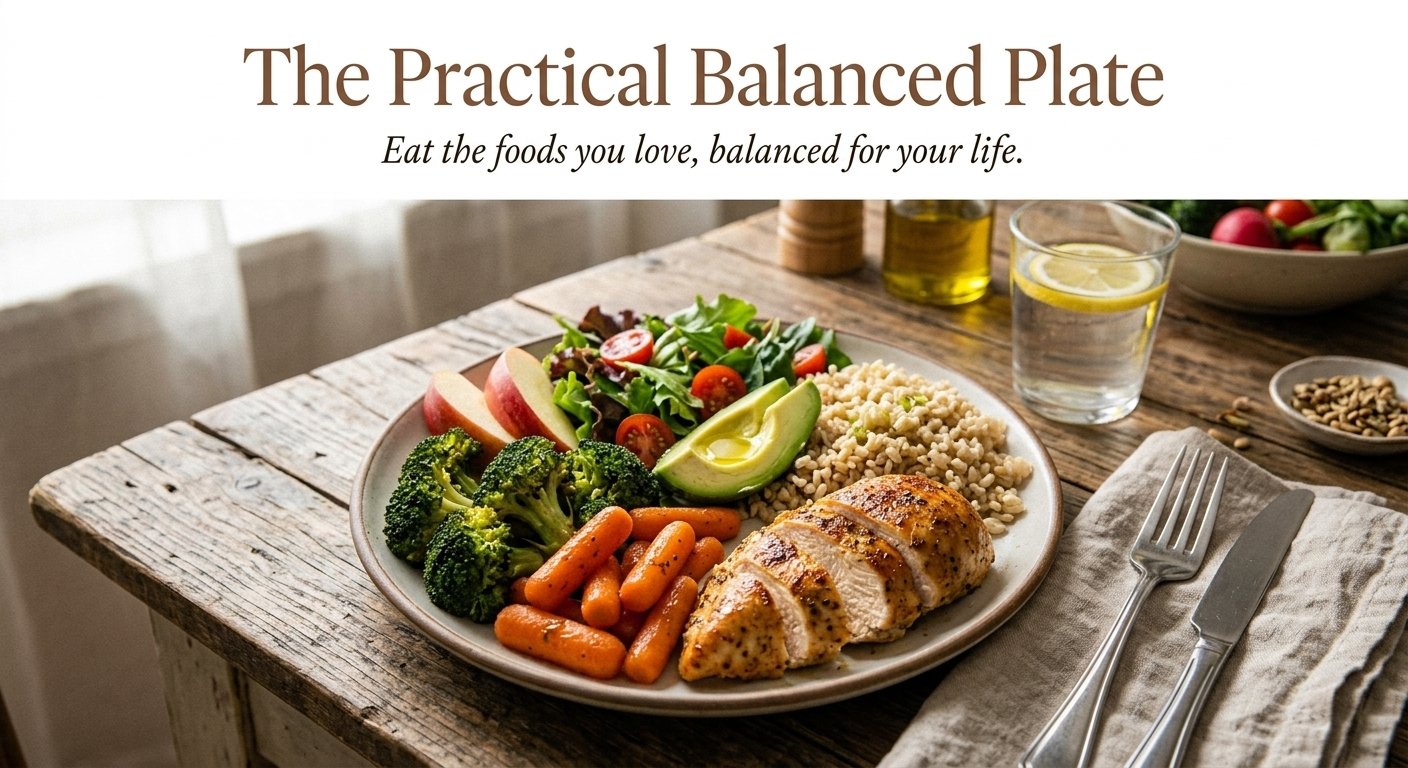
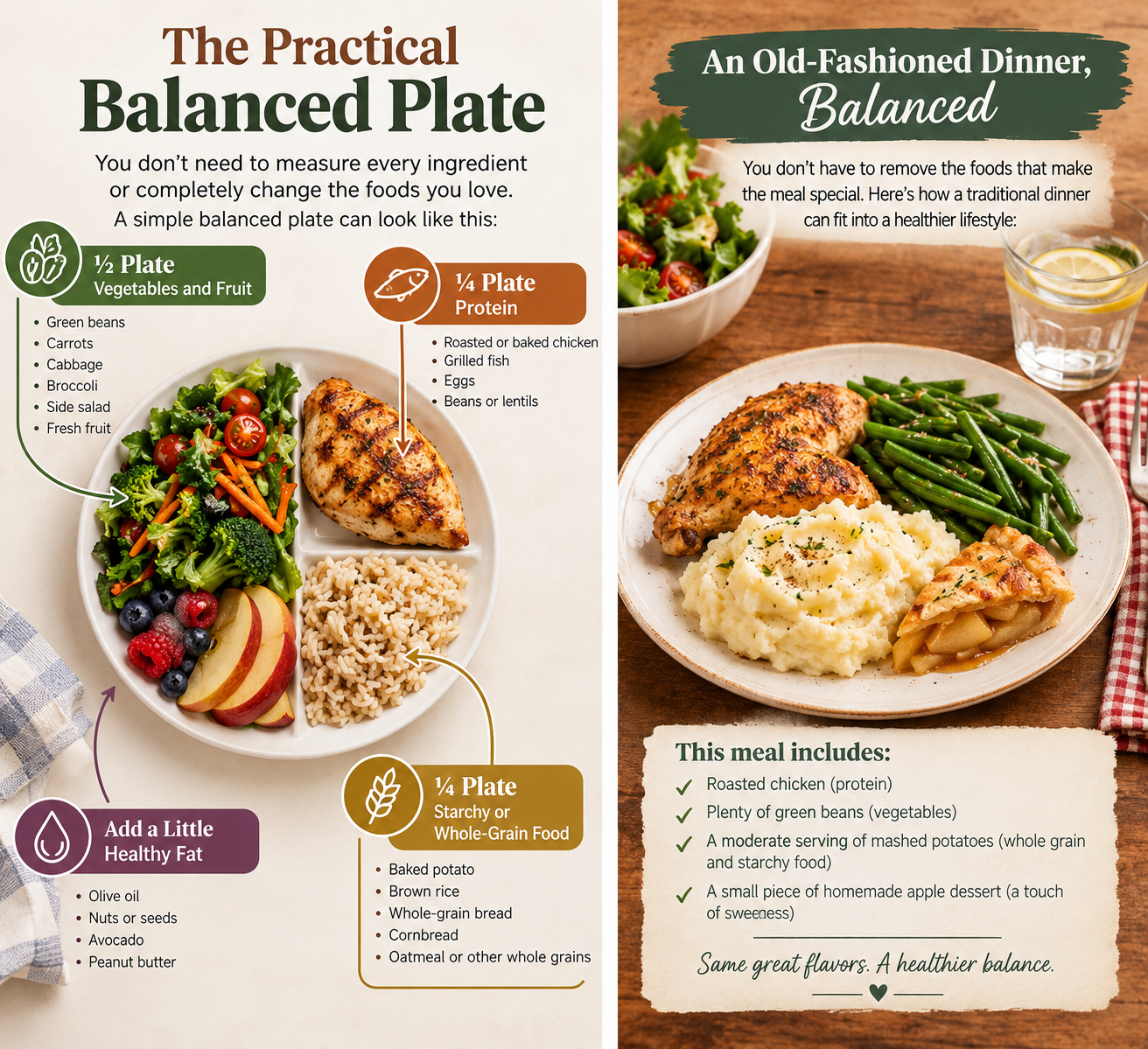
A traditional meal built around vegetables, beans, whole grains, fruit, and sensible portions can fit comfortably into a healthy lifestyle.
And perhaps that’s why these foods are worth keeping around.
They’re more than ingredients and recipes.
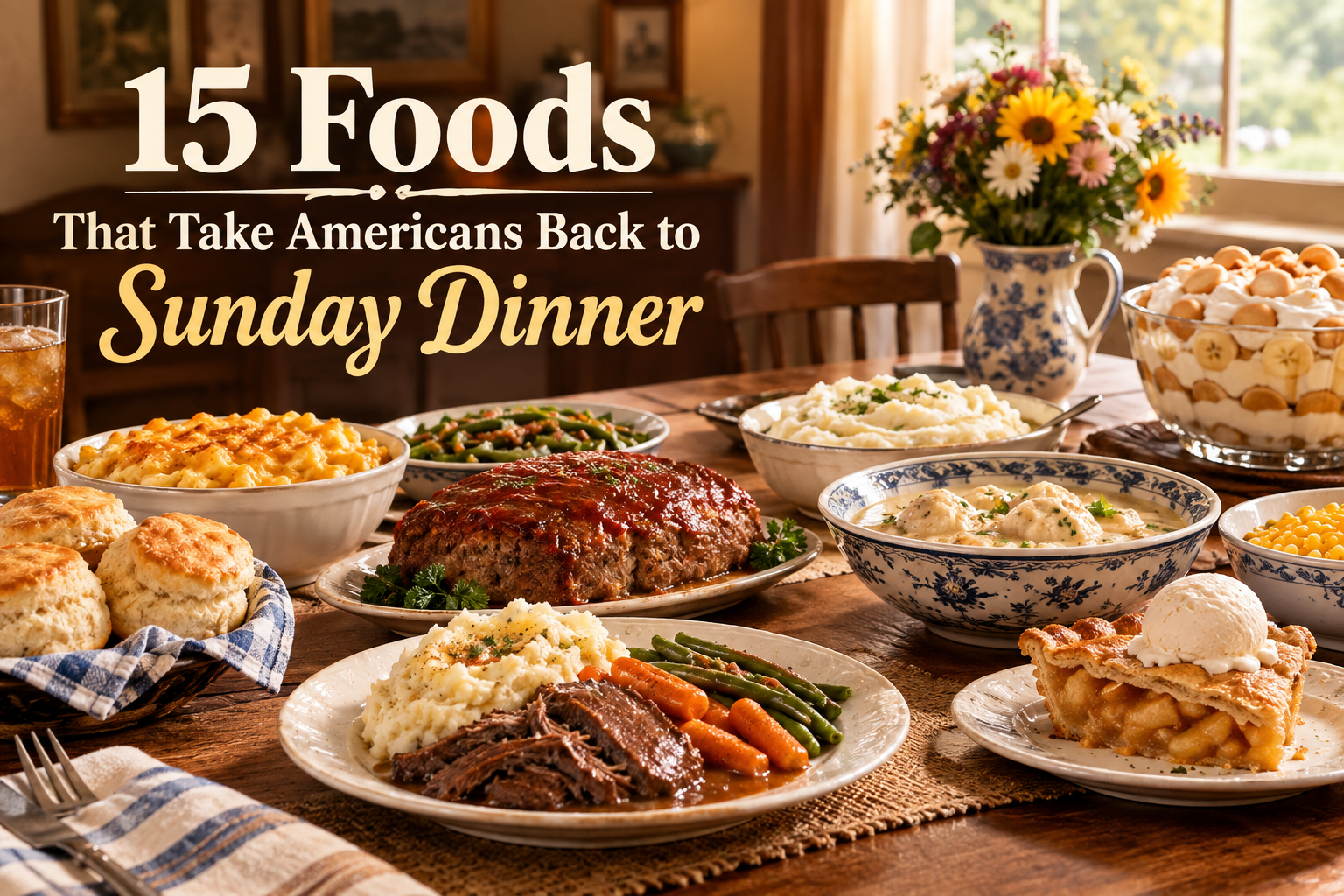
They remind us of Sunday dinners, family breakfasts, summer gardens, church suppers, and evenings when someone made dinner from whatever happened to be in the pantry.
Those memories matter, too.
A Final Thought
The next time you find an old family recipe tucked inside a cookbook, don’t be so quick to put it back on the shelf.
Take another look.
Maybe it needs a little less salt. Maybe you can use less butter or sugar. Maybe adding a few vegetables will make the meal more balanced.
But you may not need to change it nearly as much as you think.
Healthy eating doesn’t have to mean leaving traditional food behind. Sometimes it simply means bringing those old recipes into the kitchen with a little more balance—and enjoying them the way they were meant to be enjoyed.