
Healthy eating doesn’t require meticulous measuring or abandoning the comfort foods you love. Maintaining a balanced diet is less about strict restriction and more about understanding proportional food groups. By visually organizing your plate, you can create satisfying, nutrient-dense meals that seamlessly fit your lifestyle.
The Essentials of a Balanced Plate
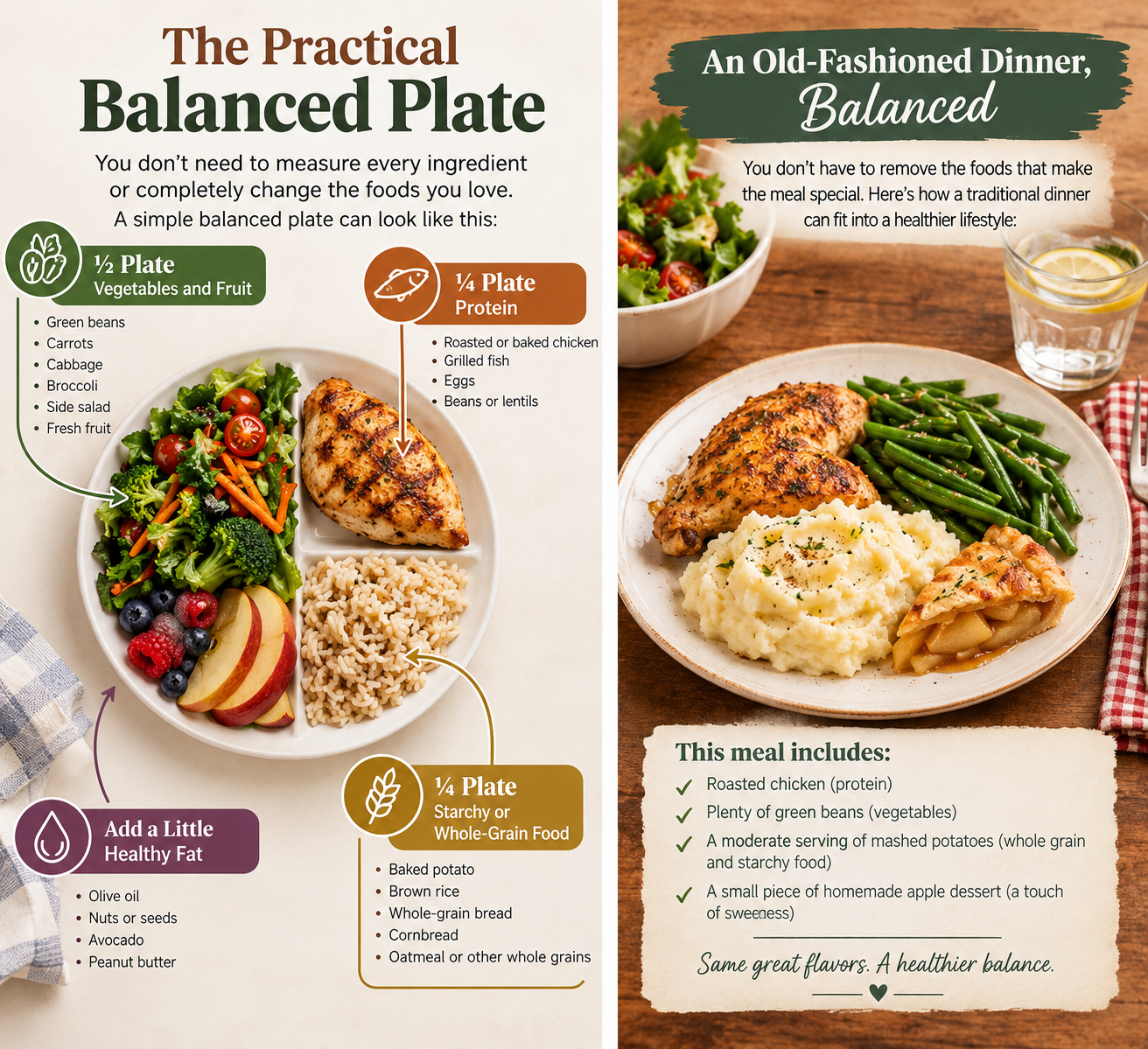
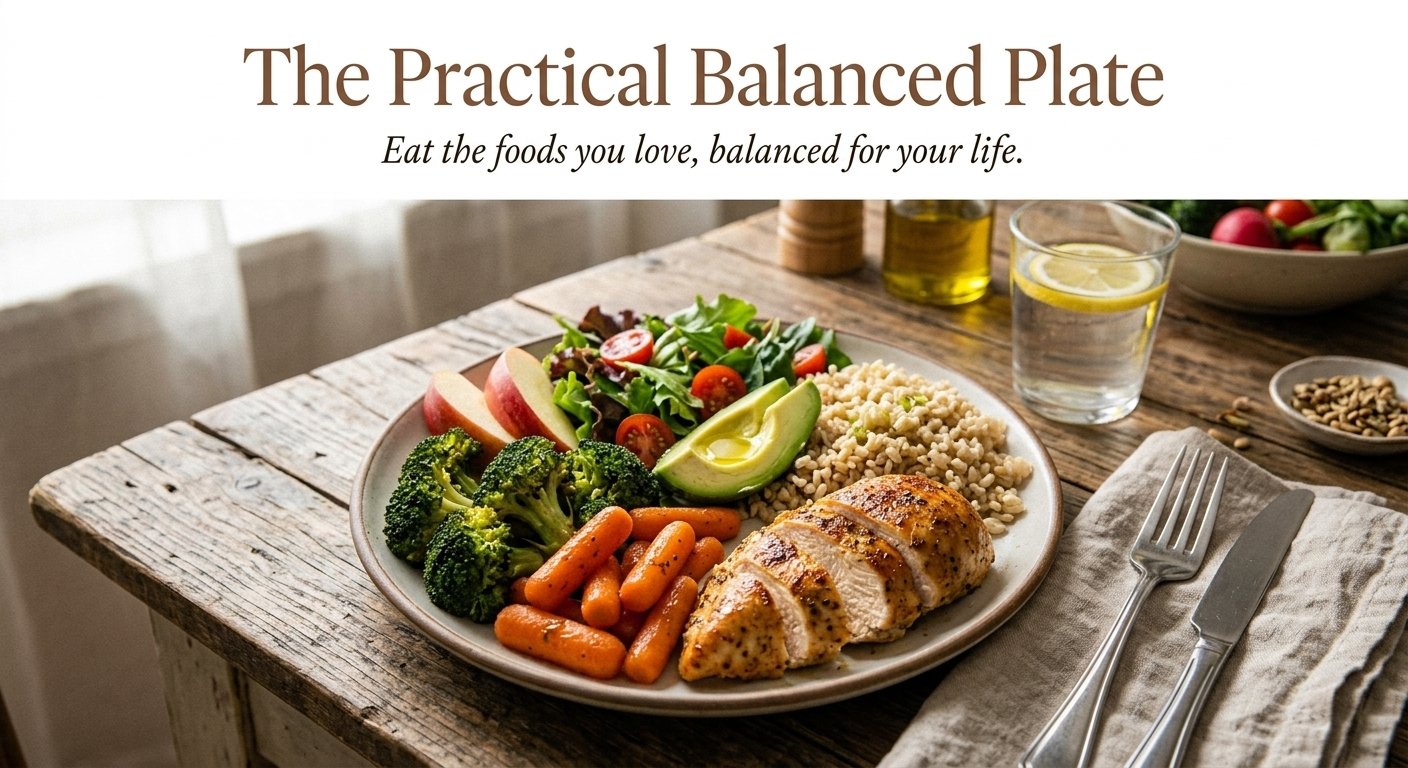
To build a well-rounded meal, focus on dividing your plate into three primary visual sections, accompanied by a modest serving of healthy fats:
- $\frac{1}{2}$ Plate: Vegetables and Fruit
Fill half of your plate with non-starchy vegetables and fresh fruits to maximize your fiber, vitamin, and mineral intake. Excellent options include:- Green beans, carrots, cabbage, and broccoli
- Side salads with fresh greens
- Fresh fruit sliced alongside the meal
- $\frac{1}{4}$ Plate: Quality Protein
Dedicate a quarter of your plate to lean, high-protein options to support muscle health and keep you full longer:- Roasted or baked chicken breast
- Grilled fish
- Eggs
- Plant-based proteins like beans or lentils
- $\frac{1}{4}$ Plate: Starchy Foods or Whole Grains
Reserve the remaining quarter for energy-dense carbohydrates:- Baked potatoes or sweet potatoes
- Brown rice or whole grains (e.g., oatmeal)
- Whole-grain bread or cornbread
- A Touch of Healthy Fat
Enhance flavor and support nutrient absorption by integrating small amounts of unsaturated fats:- Olive oil (for cooking or dressing)
- Nuts, seeds, or peanut butter
- Fresh avocado
Putting It Into Practice: An Old-Fashioned Classic, Balanced
You don’t need to eliminate traditional home-cooked dinners to eat healthy. By applying the balanced plate concept, classic comfort foods can remain a staple in your diet.
Example: A Balanced Traditional Dinner
A classic roast chicken meal can be easily adapted to maintain high nutritional value without losing its comfort appeal:
- Protein: A serving of savory roasted chicken.
- Vegetables: A generous portion of cooked green beans covering a significant share of the plate.
- Starchy Side: A moderate serving of creamy mashed potatoes.
- A Small Treat: A small slice of homemade apple pie or dessert to satisfy a sweet craving while keeping overall sugar intake in check.
Conclusion
Healthy living is built on sustainability. By managing portions naturally rather than counting every calorie, you can enjoy rich flavors, traditional meals, and vibrant health all on the same plate.
Healthy eating doesn’t require meticulous measuring or abandoning the comfort foods you love. Maintaining a balanced diet is less about strict restriction and more about understanding proportional food groups. By visually organizing your plate, you can create satisfying, nutrient-dense meals that seamlessly fit your lifestyle.
The Essentials of a Balanced Plate
To build a well-rounded meal, focus on dividing your plate into three primary visual sections, accompanied by a modest serving of healthy fats:
- $\frac{1}{2}$ Plate: Vegetables and Fruit
Fill half of your plate with non-starchy vegetables and fresh fruits to maximize your fiber, vitamin, and mineral intake. Excellent options include:- Green beans, carrots, cabbage, and broccoli
- Side salads with fresh greens
- Fresh fruit sliced alongside the meal
- $\frac{1}{4}$ Plate: Quality Protein
Dedicate a quarter of your plate to lean, high-protein options to support muscle health and keep you full longer:- Roasted or baked chicken breast
- Grilled fish
- Eggs
- Plant-based proteins like beans or lentils
- $\frac{1}{4}$ Plate: Starchy Foods or Whole Grains
Reserve the remaining quarter for energy-dense carbohydrates:- Baked potatoes or sweet potatoes
- Brown rice or whole grains (e.g., oatmeal)
- Whole-grain bread or cornbread
- A Touch of Healthy Fat
Enhance flavor and support nutrient absorption by integrating small amounts of unsaturated fats:- Olive oil (for cooking or dressing)
- Nuts, seeds, or peanut butter
- Fresh avocado
Putting It Into Practice: An Old-Fashioned Classic, Balanced
You don’t need to eliminate traditional home-cooked dinners to eat healthy. By applying the balanced plate concept, classic comfort foods can remain a staple in your diet.
Example: A Balanced Traditional Dinner
A classic roast chicken meal can be easily adapted to maintain high nutritional value without losing its comfort appeal:
- Protein: A serving of savory roasted chicken.
- Vegetables: A generous portion of cooked green beans covering a significant share of the plate.
- Starchy Side: A moderate serving of creamy mashed potatoes.
- A Small Treat: A small slice of homemade apple pie or dessert to satisfy a sweet craving while keeping overall sugar intake in check.
Conclusion
Healthy living is built on sustainability. By managing portions naturally rather than counting every calorie, you can enjoy rich flavors, traditional meals, and vibrant health all on the same plate.